 There’s an old Yiddish saying that translates, “Man plans and God laughs,” echoing Proverbs 16:9: “The heart of man plans his way, but the Lord establishes his steps.” This proverb has proven true in my own vocation. I once had many detailed plans for my future, carefully arranged in my mind; religious life was not among them.
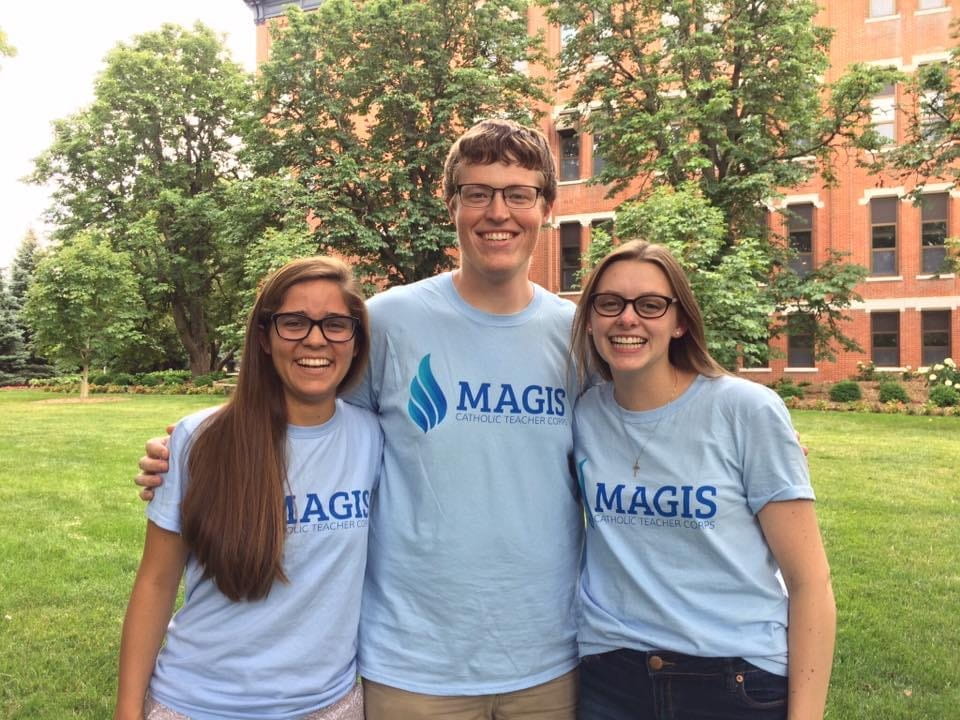
After graduating from college, I began my teaching career as part of the Magis Catholic Teacher Corps program. I was placed in Kansas City, Kansas, where I lived in a small community with three other teachers in the program. Looking back, I can see how much I was struggling in my own faith, especially struggling to see the importance of the liturgy, the sacraments, and prayer in my life. I had convinced myself that my service as an educator would suffice for my relationship with God; prayer would remain secondary.
During that first year teaching, however, so much changed. I loved my work, but I was also confronted with the difficulties and injustices my students faced on a daily basis. One day, I reached a breaking point. I realized that I was not enough—that I could not carry these burdens alone—and that I was missing something, or rather Someone. I was missing a real and intimate relationship with Christ.
By God’s grace, I was moved to change. The Mass and the Eucharist became my substance and strength. Prayer became essential to both my daily life and my vocation as a teacher. Gradually, I began letting God into my life and my plans. In hindsight, I can see that He had been guiding my steps all along, quietly planting and cultivating the seeds of my vocation and a zeal for the charism of the Apostles long before I even thought about religious life.
As my relationship with Christ deepened, so did my attentiveness to His voice stirring within my heart. I cannot say exactly when the thought first arose, but I remember it clearly: “Clara, what about religious life?” My immediate reaction was to dismiss it. I had countless reasons why it was impossible, beginning with my carefully constructed plan to eventually return to my hometown and family.
Months later, I shared this persistent thought with my spiritual director. To my surprise, he did not dismiss it; instead, He encouraged me to pursue it in prayer. Something shifted dramatically in me that day. It seemed that God had been simply waiting for me to articulate the possibility out loud. I had little sense of what to do next. I did not know any women’s religious communities, and I was certain I was the only young woman around with this desire. Yet, there was a gentle grace and consolation that propelled me courageously forward into this unfamiliar territory. That grace from God accompanied me through the many stages of my discernment: the fears of telling my family and friends, especially my parents; the “come and see” visits; meetings with vocation directors; periods of doubt; and, most importantly, the steady growth of my prayer and relationship with God.
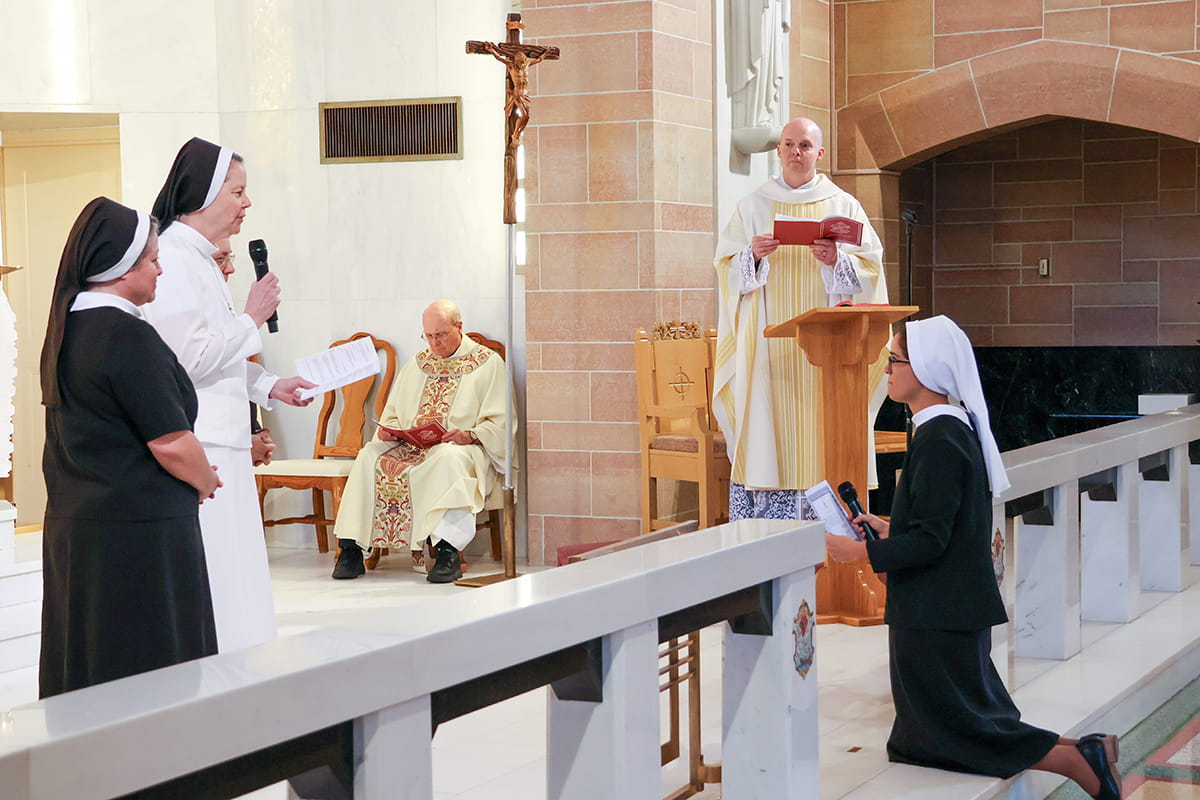
I encountered the Apostles of the Sacred Heart of Jesus through my spiritual director, initially because of their work in education. However, what ultimately moved me to turn my life and plans upside down and request to enter was not their apostolic mission but their foundation –their charism– embodied in the Sisters I spent time with. It is a charism centered on the pierced heart of Christ, calling our Sisters to bring His merciful, loving, and healing presence into the world in the spirit of the first Apostles. In their presence, I felt at home. That is the most accurate way I can describe recognizing this charism both in them and within my own heart.
Looking back, I can see God’s work in every step of my discernment. He invited me to place before Him my plans, fears, imperfections and doubts, and by His grace I was able to respond. Even when I entered as a postulant, I did so with many unanswered questions. There were sacrifices to be made and areas of my heart still in need of transformation.
This, in many ways, is the beauty of discernment. Discovering one’s vocation is not the conclusion of the journey but its beginning: the first step in a lifelong self-offering to God. Our foundress wisely reminds us, “A vocation is a flower which is nurtured and made increasingly beautiful with the powerful sap of sacrifice.” Whatever our vocation, at the heart is our relationship with God–a relationship that never ceases to deepen. He asks only that we let Him lead the way.